

The Marc Fishman case, a 45-day sentence, and a widening storm around Westchester justice
By any measure, the story of Marc Fishman should be shocking. A Bronx father of four and disability rights advocate, Fishman has spent nearly seven years battling Westchester County prosecutors, judges, and police officers who he says conspired to rob him of both his liberty and his family. Now, after years of legal purgatory, he has been ordered to serve 45 days in jail—effective today, September 17, 2025—despite exculpatory evidence, repeated violations of the Americans with Disabilities Act (ADA), and his separation from his children for more than 1,600 days.
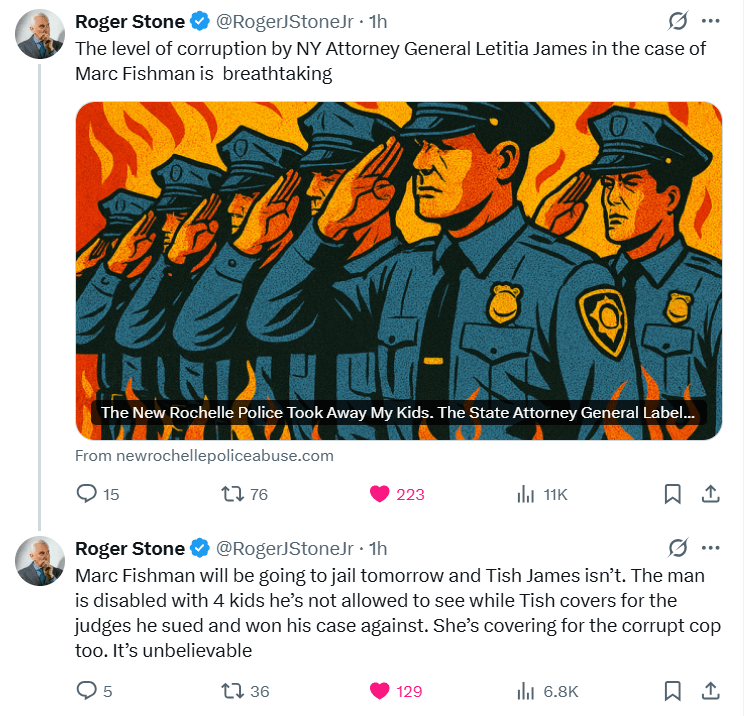
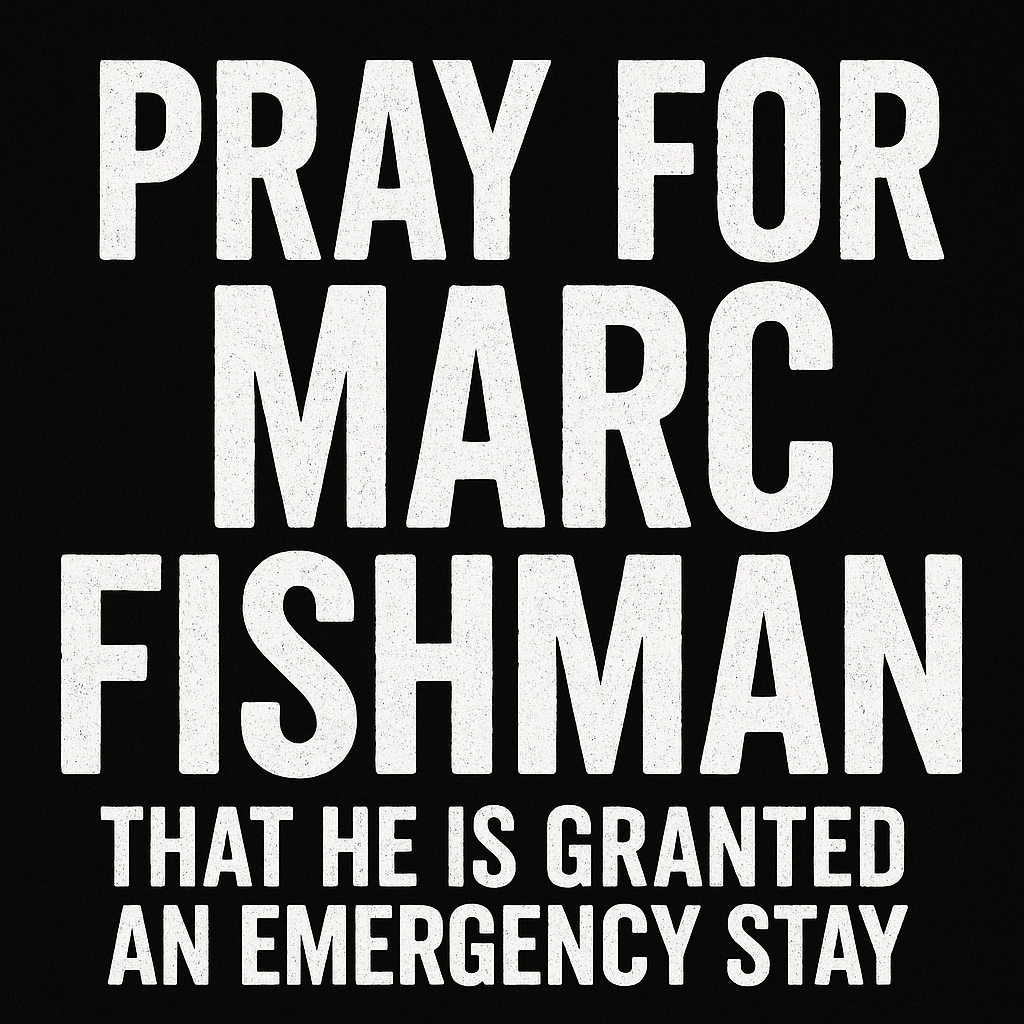
The case has caught the attention of national figures like Roger Stone, who shared Fishman’s story with his millions of followers, framing it as a chilling example of unchecked state corruption. Supporters have rallied through petitions, coverage at NewRochellePoliceAbuse.com, and fundraising via Marc’s GoFundMe campaign. And yet, as of this writing, Fishman’s legal team is still scrambling to secure an emergency stay of imprisonment from the Appellate Division—an effort that supporters pray will succeed before the clock runs out.
A Father Arrested During a Paid Visit
The nightmare began on December 15, 2018. Fishman had prepaid for a full-day supervised visitation with his autistic son, supported by a 22-page court order granting access from 10:00 a.m. to 5:00 p.m. Both a court-approved supervisor and a disability aide were present. That morning, the supervisor confirmed in writing that the visit was cleared.
By 11:35 a.m., however, police entered and arrested Fishman for allegedly violating an order of protection. The arresting officer—Lane Schlesinger, later fired after more than 40 civilian complaints—was captured on audio and video telling Fishman’s aide that “Mr. Fishman had no intent to commit a crime.” This evidence, withheld at trial, was only unearthed years later through Fishman’s federal civil rights lawsuit against the New Rochelle Police (19-cv-00265-NSR). Neither the jury nor his trial counsel ever saw it.
That arrest set off a chain reaction: a criminal case, years of custody denials, and ultimately the sentence Fishman now faces.
Disabilities Ignored, Accommodations Denied
Fishman lives with a traumatic brain injury, tinnitus-related hearing impairment, cognitive/occipital neuralgia, and post-concussion memory loss. Under the ADA, state courts with 50 or more employees must provide a liaison and ensure accommodations like realtime transcription. Westchester did neither.
In fact, Fishman was wrongfully denied transcription during trial, preventing him from hearing or responding to witness testimony. It wasn’t until July 2021 that the Second Circuit Court of Appeals (Case No. 20-1300) ordered realtime transcription as an ADA accommodation. By then, the damage was done. Judge David Zuckerman refused to grant a retrial even after acknowledging that Fishman had been denied the tools he needed to participate in his own defense.
This is more than a procedural quibble. The right to hear evidence and confront witnesses is foundational to due process. Denying those tools to a hearing-impaired defendant is tantamount to trying him in a language he doesn’t speak.
A Seven-Year “Misdemeanor”
Statistically, the average misdemeanor in New York resolves in less than six months. Fishman’s case has dragged on for nearly seven years, delayed by COVID-19 shutdowns, endless prosecutorial maneuvers, and what his supporters describe as deliberate stalling by the District Attorney’s office.
In August 2025, during a contentious sentencing hearing, the judge acknowledged both the outstanding bench warrant (issued in 2022) and the unusual timeline. The defense argued it was time for finality. The prosecution insisted Fishman was a “fugitive.” The judge ultimately vacated the warrant, permitted Fishman to appear virtually with realtime transcription, and confirmed that ADA accommodations would be honored—at least at sentencing.
That acknowledgment, however, only underscored the contradiction: if ADA accommodations are required now, why were they denied when Fishman was tried and convicted years ago?
The Role of the Police and the Attorney General
The misconduct of Officer Lane Schlesinger looms large. According to records cited in Fishman’s press release, New York Attorney General Letitia James’s office documented over 40 complaints against him, including falsified reports. Yet this record was never disclosed to Fishman’s defense. Schlesinger was later terminated, but his role in the 2018 arrest remains the cornerstone of Fishman’s conviction.
Supporters also accuse AG James of quietly excluding Fishman’s matter from misconduct reports because her office defended Westchester judges implicated in his federal litigation. That, they argue, is a glaring conflict of interest. Whether intentional or not, the omission feeds the perception of a cover-up.
Meanwhile, Governor Kathy Hochul has refused to intervene, even as Fishman’s allies petitioned her to transfer the case to the Bronx and review systemic ADA failures.
A Family Torn Apart
The human toll of this saga is profound. Fishman has been separated from his four children for over 1,600 days. Orders of protection—sought by the DA even for children he was never accused of harming—have walled him off completely. Birthdays, holidays, school milestones—all have passed without his presence.
“I’ve fought for years to simply be a father to my kids, but the system continues to punish me instead of protecting my rights,” he said in the September 11, 2025 press release. “Justice delayed has already taken years of my life—and now, they’re taking my freedom”.
This is not just about one father. Disability rights advocates, including Disability Rights New York, have cited the case as a warning sign: if state courts can deny accommodations so blatantly, every disabled litigant in New York is at risk.
Emergency Pleas for a Stay
As sentencing day approached, Fishman’s attorney Caner Demirayak filed an emergency application with the Appellate Division for a stay of imprisonment pending appeal. Emails between counsel and court staff show frantic efforts to secure a docket number and have Justice Laurence L. Love hear the matter.
“Due to my client’s disabilities and health he needs urgent assistance to avoid irreparable harm,” Demirayak wrote on September 15.
Fishman himself emailed the next morning: “Am dealing with bleeding from trying to pass kidney stones and am in pain. I really need the appellate division assistance here. Please help”.
At press time, the stay had not yet been granted. Supporters, family, and faith leaders have openly prayed for the court to intervene before September 17.
A National Spotlight
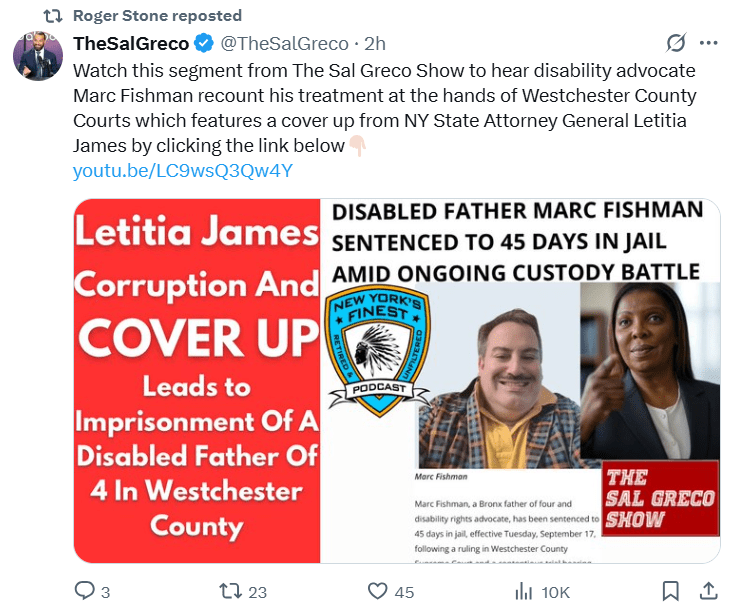
What might otherwise be dismissed as a local custody battle has become a symbol of systemic rot. Roger Stone, never shy of controversy, amplified Fishman’s story to his audience on X, framing it alongside critiques of Letitia James’s broader prosecutorial record. The reversal of a $450 million judgment against Donald Trump by an appellate court just days earlier lent the narrative extra force: critics argue James has pursued political cases at the expense of justice for ordinary New Yorkers.
Websites like NewRochellePoliceAbuse.com have documented Fishman’s allegations for years, providing timelines, petitions, and case files for public review. His GoFundMe campaign seeks to offset mounting legal bills, with donations funding appeals, filings, and disability-related costs.
Grassroots advocacy is doing what official oversight has not: shining light on a case that might otherwise vanish into sealed court files.
Why This Matters
Marc Fishman’s ordeal is not just about one man. It raises urgent questions:
- Due process: Can a conviction stand when exculpatory evidence is withheld and the defendant cannot hear the trial?
- Disability rights: If state courts can ignore ADA obligations with impunity, what recourse do disabled litigants have?
- Judicial accountability: What does it mean if complaints to the Commission on Judicial Conduct simply vanish without action?
- Family integrity: Why should misdemeanor proceedings, long since stale, justify separating a father from his children for nearly seven years?
The answers will matter not just to Fishman, but to every disabled parent, every litigant seeking accommodations, and every New Yorker who believes the courtroom should be a place of justice, not punishment for daring to assert one’s rights.
The Final Hours
As September 17 looms, supporters cling to faith. They pray that Justice Love or another appellate judge will sign the emergency stay. They pray that Fishman’s health—already fragile from neurological injuries and now kidney stone complications—will not be further broken by incarceration. They pray that the system, which has so far failed to deliver justice, will at last take a small step toward fairness.
And above all, they pray that Marc Fishman will one day be reunited with his four children—not as a cautionary tale of judicial abuse, but as a father restored.
Get Involved
- Learn more at NewRochellePoliceAbuse.com
- Support Marc’s legal defense through his GoFundMe campaign
- Sign the petition for fair justice for disabled litigants in New York courts
🙏 Prayers go out for Marc Fishman, that the Appellate Division will grant the emergency stay of his 45-day sentence, sparing him irreparable harm and giving him a chance to continue the fight for justice—for himself, and for his children.
 New Rochelle Police Abuse